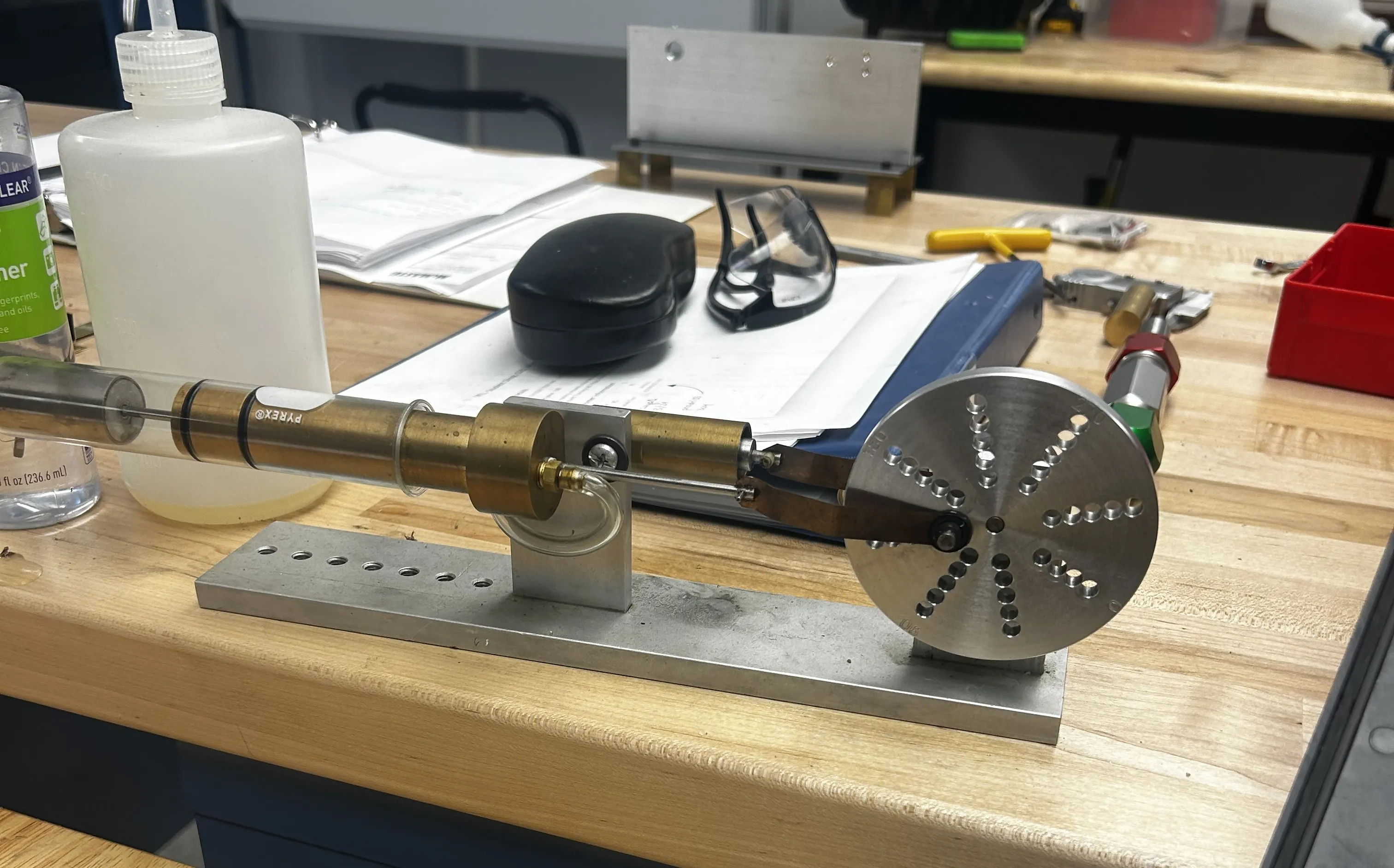
Fabricated parts for a functional Stirling engine based on provided engineering drawings. In order to pass this class the stirling engine was required to run independently for a minute straight. Throught this project I became familar with how to use a Lathe, Mill, bend and cut sheet metal as well as learning how to create a successful sand cast.
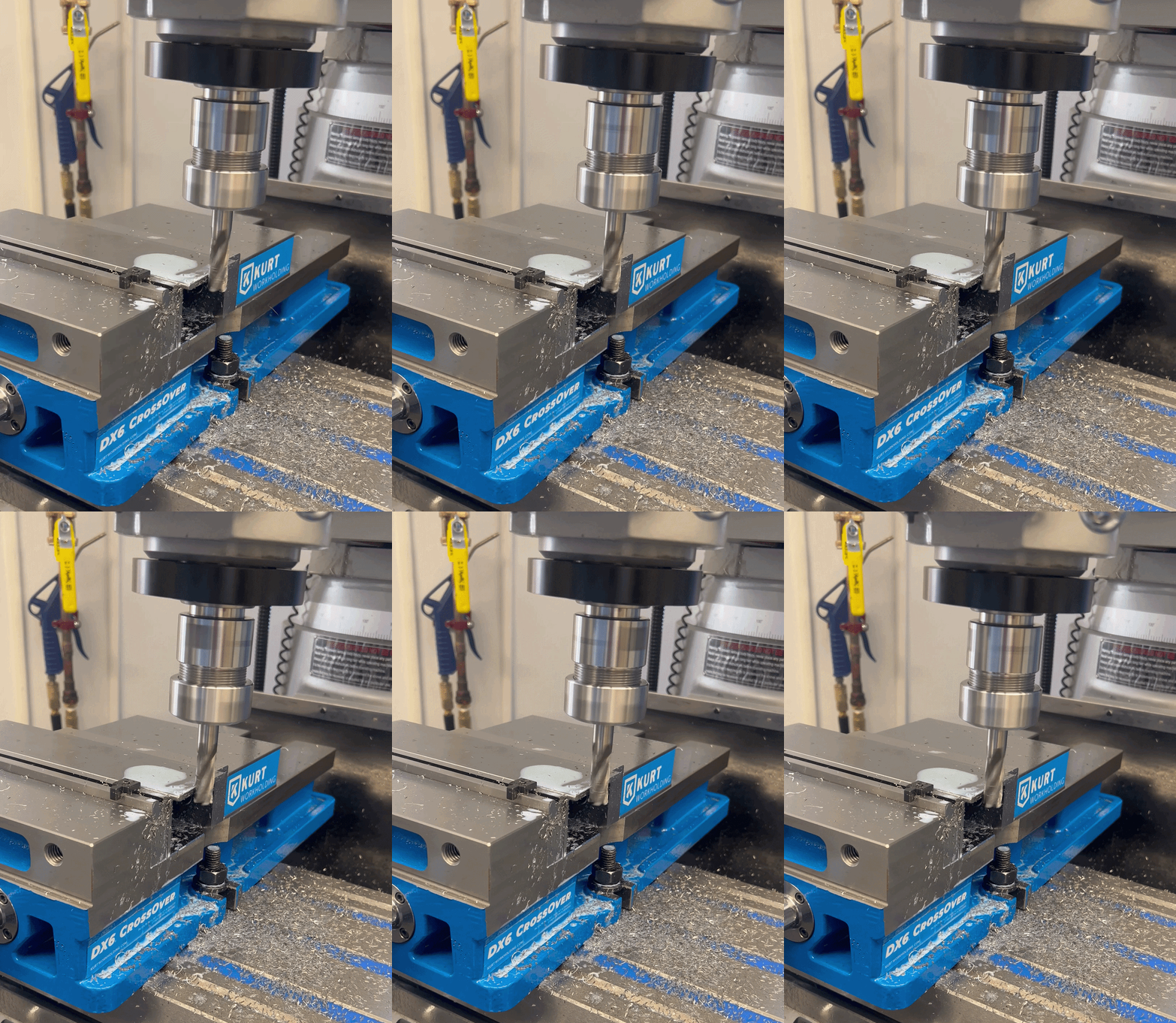
The mill was used to fabricate the base, pistion and flywheel post, the piston, piston wheel, and piston housing within a tolerance of +/- 0.01 inch.
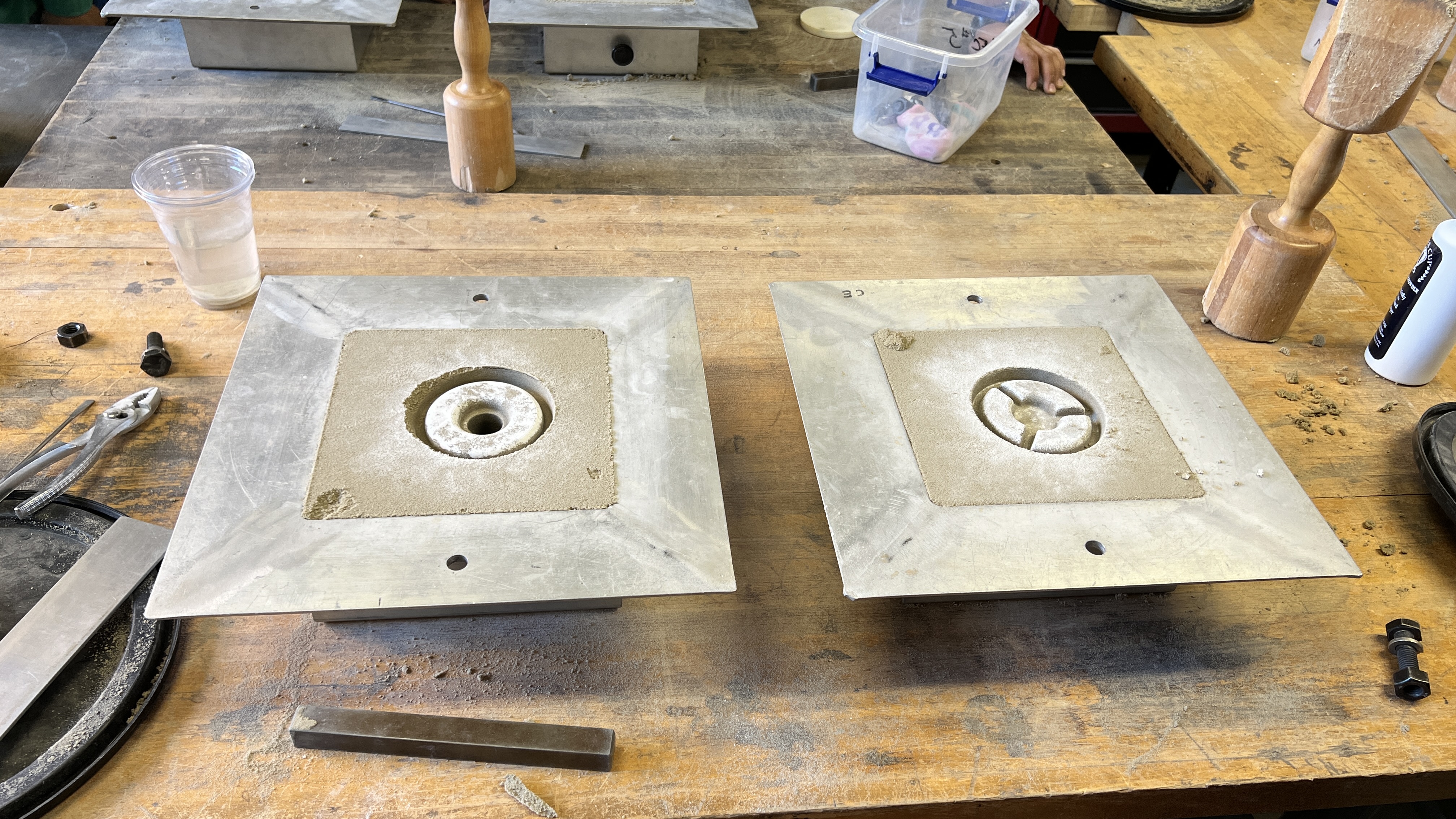
The flywheel was the only part of the engine that was cast, but it was also one of the coolest manufacturing methods I learned in this course. Being able to turn a 3D-printed part into a solid metal part is super cool. As someone who enjoys building and tinkering with things, learning how accessible and straightforward casting can be was especially valuable.
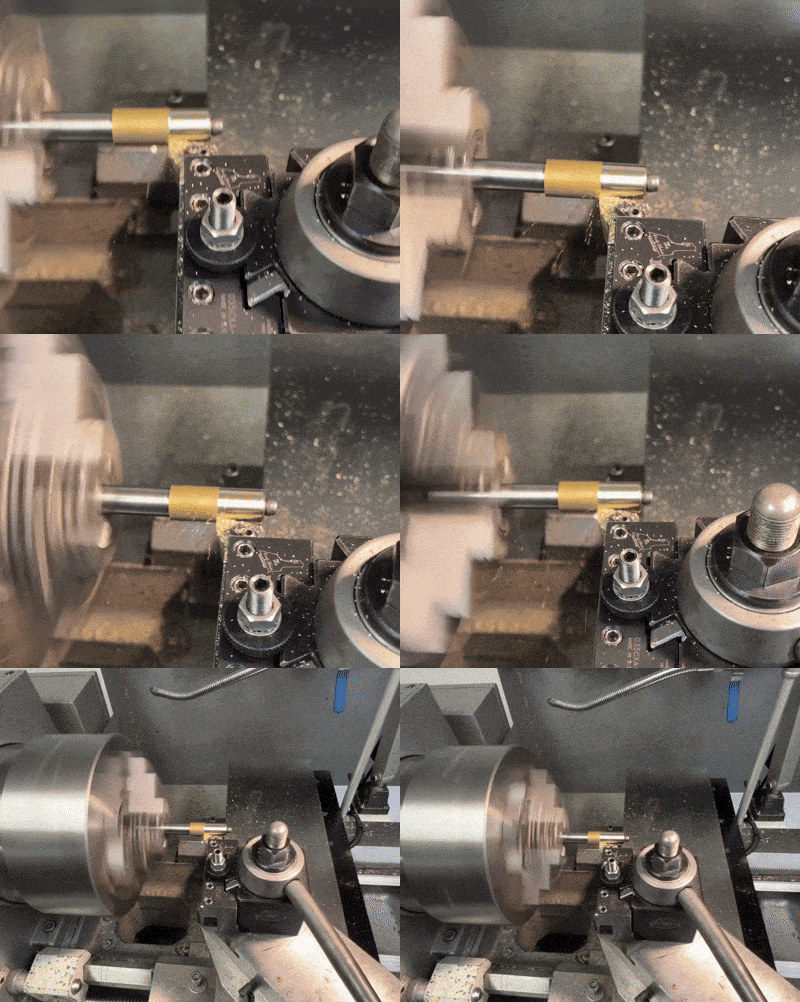
The lathe was used to fabricate the piston wheel, pistion housing, displacer pistion, and used for secondary processing to refine the sandcasted flyWheel. All parts where sucessfully machined within a tolerance of +/- 0.01 inch.
The completed engine was assembled using the fabricated components along with the required hardware and tubing. The engine was tested with an small flame and successfully started from a cold state, running continuously for one minute.